


 Help and support center
 Accesibility
 Rate your expirience
How can we help you?


We want to improve your experience
Your experience inspires us to improve. Please rate our website using the following survey.
If you wish to make a request, petition or suggestion, you can do so through our SPQyF system and contact us:
 Go back

 Back
Back
Learn more about our activities:

Innovation and Sustainability: The Future of the Food Industry in Colombia

Free Cybersecurity Tool Developed for Colombian MSMEs
Tourism that Transforms: Voices of Peace and Sustainability resounded on Europe Day, driven by Inclusive, Green and Competitive Economy.
Notes:
Transforming the industry: How the Foodtech Initiative is boosting productivity in Colombia
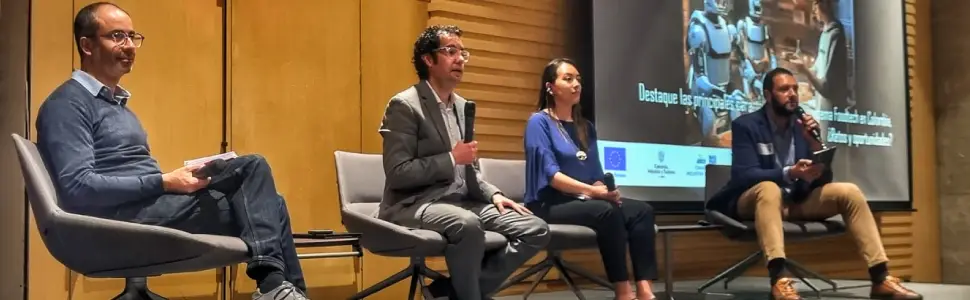
The "Foodtech" initiative, which seeks to boost productivity and competitiveness in the country's food industry, presented its key results at the "Boosting the Foodtech ecosystem in Colombia" conference. This achievement, materialized by the Bogota Chamber of Commerce and its allies, included the delivery of a diagnostic characterization of the Foodtech industry in Colombia, a methodology for the adoption of emerging and sustainable technologies and a digital tool for scientific data analysis. The deliverables of this initiative are available for free public consultation on the portals of the partners, in order to promote their appropriation and dissemination.
Tourism that Transforms: Voices of Peace and Sustainability resonated on Europe Day, driven by the Inclusive, Green and Competitive Economy project.
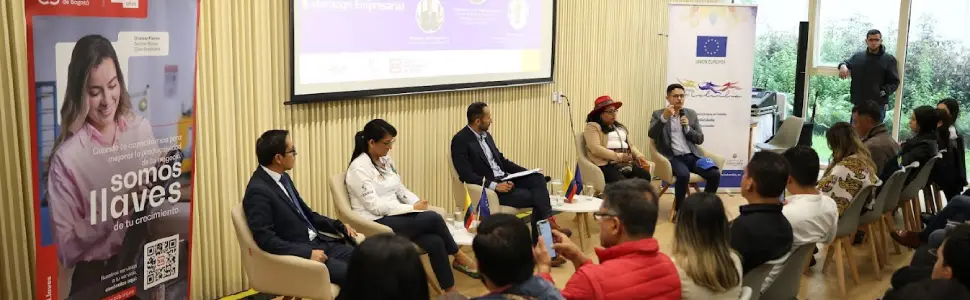
The discussion "DESTINATIONS OF PEACE: SUSTAINABLE TOURISM, COMMUNITY AND BUSINESS LEADERSHIP", held on May 9 in Bogota as part of the celebration of Europe Day, showcased local experiences in sustainable tourism, highlighting the contribution of the Sustainable Tourism initiative of the Technical Assistance "Inclusive, Green and Competitive Economy", promoted by the Bogota Chamber of Commerce and the European Union. This event, with the participation of Laura Durana of ACOTUR and moderated by Erick Fabián Montoya of the Bogota Chamber of Commerce (CCB), served to share knowledge and best practices in the sector. The event was attended by representatives of FONTUR, the Chamber of Commerce of San José del Guaviare, the Foundation for Sustainable Territorial Development of Nariño and the tourism board of the department of Caquetá.
The strategic alliance between the BCC and the European Union shows its success in sustainable and competitive inclusive economy.

The Bogota Chamber of Commerce (CCB) and the European Union in Colombia presented the main achievements of their strategy "Inclusive, Green and Competitive Economy" during a special broadcast of the radio program "Negocios con Pasaporte" (Business with Passport). This project seeks to increase the efficiency and impact of initiatives that support public policies to reactivate the economy. Its goal is clear: to help companies develop sustainable and inclusive productive models that meet the highest international standards, through concrete actions in digitalization, innovation, productivity and improvement of the business environment. The program was attended by Sonia Tato Serrano, Deputy Head of Cooperation of the European Union in Colombia; Rosiris Zambrano, Head of National and International Cooperation of the Bogota Chamber of Commerce; Daniel Colmenares, Sector Coordinator of Colombia Productiva/Spokesperson for the Ferrous Linkages initiative; and Hugo López, CEO of Innovakit and spokesperson for the Foodtech initiative.
Regional alliance to strengthen the iron and steel sector in Colombia
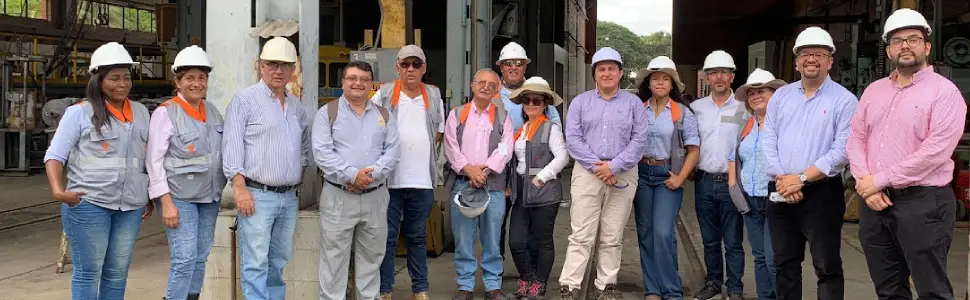
Cali was the epicenter of the first successful day of socialization of the initiative "Strengthening the value chain of the railway sector". The event brought together businessmen, public entities and the academic sector, who learned about the sector's reference framework, the progress and results of the diagnosis of the Bogotá-Belencito railroad corridor. Participants explored the value chain and the action plan, showing great regional interest in the reactivation of the railroad. The day included a visit by experts to the railway workshop in Palmira, with the objective of learning about the practices, developments and challenges faced in this region of the country. The event counted with the participation and collaboration of regional allies such as the Regional Transportation Authority, ART Movamos Región, the Secretariat of Economic Development of Cali and the Cali Chamber of Commerce.
Human Rights Due Diligence: A Necessity for Business Competitiveness
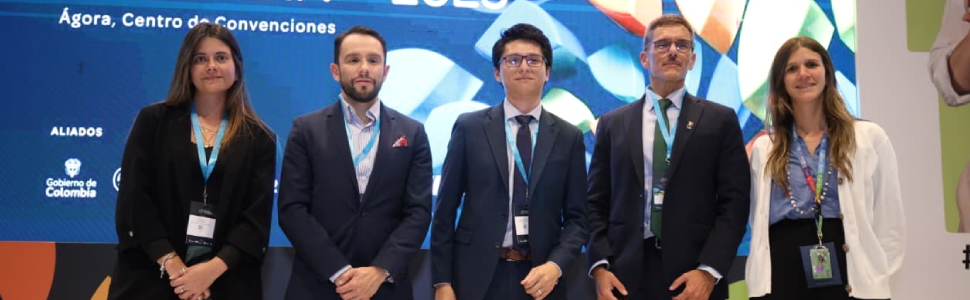
Human rights due diligence has become an essential requirement for Colombian companies to compete globally. During the Somos Sostenibles Forum and the International Summit on Sustainability and Environmental Innovation, experts highlighted the importance of combining adapted national legislation and international treaties to ensure the effective application of human rights due diligence. In Colombia, it is crucial to deepen its implementation in large companies and promote these practices in SMEs, which still show little adoption. In response, the Inclusive, Green, and Competitive Economy project, led by the European Union in Colombia, the Bogotá Chamber of Commerce, and the Ministry of Commerce, Industry, and Tourism, promotes the integration of international standards to strengthen business competitiveness and promote sustainability in the country through the Due Diligence initiative.
A train of opportunities: progressing towards more sustainable transport in Colombia
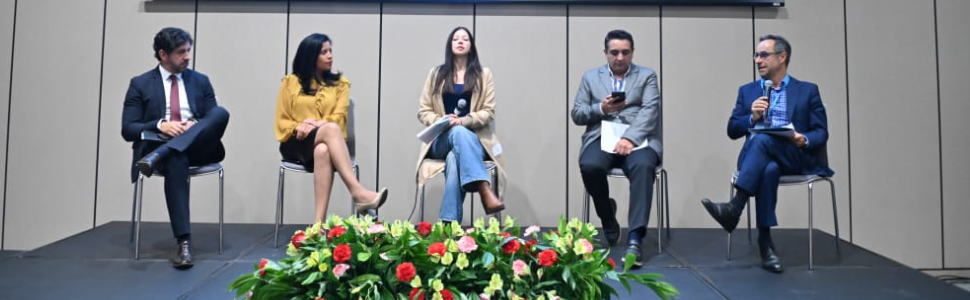
The project identified gaps in infrastructure, regulations, and technology, formulated an action plan with concrete goals, and launched a digital pilot to strengthen the technological infrastructure applied to transport.
For the European Union, this work represents much more than a study. "This initiative is a key element of the Global Gateway strategy. With the Bogotá–Belencito corridor, we have defined a roadmap for Colombian SMEs to take advantage of railway development, contributing to economic growth and sustainability," highlighted Manuel Fernández Quílez, Cooperation Attaché of the EU Delegation in Colombia.
The Vice President of Competitiveness at the Bogotá Chamber of Commerce, Juan Carlos González, emphasized that the railway corridor is not just a transport endeavor but also an engine of opportunities: "The railway sector can propel initiatives and opportunities to improve the competitiveness of transport and the productive ecosystem. We value international cooperation because it allows us to bring models proven in Europe and adapt them to the reality of Bogotá and Cundinamarca."
In the same vein, expert consultant Fabio Hernán Sánchez noted that the plan will allow Colombia to participate in all links of the railway value chain, strengthening MSMEs and betting on sustainability.
The event closed with a common message: railway development in Colombia is not just infrastructure, but also competitiveness and resilience to climate change. The results of this initiative will be taken into account for further projects led by Colombia Productiva, thus consolidating a long-term vision for railway transport in the country.
Sustainable transportation: the key to winning the race toward a clean planet
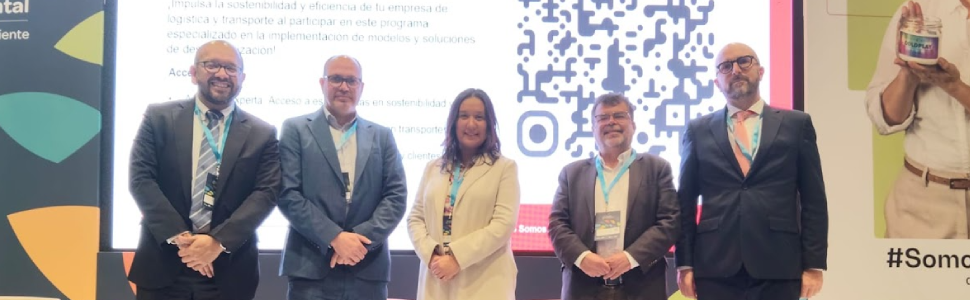
Within the framework of the "Somos Sostenibles" Forum and the International Summit on Sustainability and Environmental Innovation, international experts discussed the progress of the transport sector toward decarbonization. The panel "Let's Change Course: Towards a More Sustainable Transportation" evidenced that sustainability in logistics has ceased to be voluntary and has become an essential condition for business competitiveness.
The Sustainable Logistics initiative, developed by the Bogotá Chamber of Commerce, the European Union in Colombia, the Ministry of Commerce, Industry and Tourism, and the Bogotá – Cundinamarca Regional Logistics Alliance, as part of the Inclusive, Green, and Competitive Economy project, represents a comprehensive model that goes beyond theoretical planning. As Liliana Rivera, an expert from the initiative, highlighted, "this project had three stages: regulatory analysis, identification of decarbonization models, and practical tools for business owners."
The project generated concrete tools to diagnose the current state of decarbonization and define specific actions toward sustainability. The main achievements include the structuring of decarbonization models, public policy guidelines, a directory of sustainable suppliers, and a free specialized library for the sector.
Alberto Menghini, Head of Cooperation at the European Union, emphasized: "Colombia is articulating a very solid vision of decarbonization, an economy that wants to grow without polluting more." The projects demonstrate that sustainable mobility is possible by combining technology, financial instruments, and adequate policies.
The panel featured recognized specialists: Darío Hidalgo (Javeriana University), Liliana Rivera (MIT affiliated researcher), and Gordon Wilmsmeier (Kühne Logistics University), moderated by Mario Fontalvo, leader of the Logistics and Mobility Cluster at the Bogotá Chamber of Commerce, who contributed expertise in public policy, supply chains, and international intermodality.
Furthermore, Rivera emphasized that decarbonization is not only an environmental necessity but also an economic opportunity: "While there is initial investment, we have income and benefits in the medium term." The project responds to the Paris Agreement 2030 and the National Plan "Colombia World Life Power 2022-2026."
This joint effort positions Colombia as a regional leader in transport decarbonization, contributing to its integration into sustainable global value chains. As Rivera concluded: "We need efficient, profitable, and competitive companies that work together for a better country and environment."
Mipymes fortalecen sus capacidades en ciberseguridad gracias al trabajo conjunto entre regiones y la Unión Europea en Colombia

With the purpose of strengthening the digital security of companies and reducing their vulnerability to cybercrime, the "Secure MSMEs" (Mipymes Ciberseguras) initiative is advancing in its implementation in Bogotá, Medellín, Cali, and Barranquilla, promoting the creation of safer and more sustainable digital environments for the Colombian business sector. This action is part of the Inclusive Green and Competitive Economy project, an alliance between the European Union in Colombia and the Bogotá Chamber of Commerce, in cooperation with the Chambers of Commerce of Medellín, Cali, and Barranquilla. During the months of October and November 2025, the initiative held four regional meetings that brought together more than 40 representatives from public, private, and academic entities, all committed to strengthening the digital protection of MSMEs. These spaces focused on identifying challenges, sharing experiences, and building joint solutions to promote a culture of prevention and strengthen the response to cyber incidents. Each meeting addressed the main challenges of the regions: in Medellín, the focus was on financial crimes and information theft through phishing; in Cali, the articulation between local actors and the development of specialized talent was prioritized; in Barranquilla, the discussion revolved around disinformation and the lack of resources to address digital risks; and in Bogotá, the importance of governance and the creation of effective reporting and response procedures was highlighted. Additionally, knowledge transfer sessions were carried out with the teams from the partner Chambers of Commerce, where the "Cybersecure Route" (*Ruta Cibersegura*) was presented: a practical tool that guides companies through diagnosis, training, and the implementation of effective digital protection measures. During these sessions, participants explored content on prevention culture, risk management, strategic communication, and tools to raise awareness among the human talent of organizations regarding cyber risks. As a result, regional solution matrices were constructed across five axes: prevention and awareness, capacity building, response and remediation, articulation, and governance. These inputs contribute to the development of the National Cybersecurity Guideline for MSMEs, a document that will compile the recommendations and best practices arising from the territories, with a participatory and inclusive approach. The Secure MSMEs initiative demonstrates the power of cooperation between regions to boost the technological development and sustainability of the Colombian business sector. Strengthening the cybersecurity of MSMEs is strengthening the country's digital trust, innovation, and competitiveness.
Secure MSMEs (Mipymes Ciberseguras)

The Secure MSMEs initiative, developed in partnership with the European Union in Colombia, MinTIC (Ministry of Information Technologies and Communications), and the Chambers of Commerce of Bogotá, Medellín, Cali, and Barranquilla, strengthens the digital capabilities of companies to reduce their vulnerability to cybercrime. During 2025, regional meetings and knowledge transfer sessions were held in the country's main cities, resulting in the construction of solution matrices and progress toward a National Cybersecurity Guideline for MSMEs. This initiative promotes the creation of safer, more sustainable, and collaborative digital environments in Colombia. Due Diligence (Debidas Diligencias) Summary: The Due Diligence initiative, in partnership with the European Union in Colombia, the Ministry of Commerce, Industry and Tourism, and the Bogotá Chamber of Commerce, promotes responsible business conduct and respect for human rights in business operations. During 2025, workshops were held in Cali, Ibagué, Manizales, and Medellín, along with a national call for good practices and the development of two technical guides that will be presented in December. The process fosters a more sustainable, transparent, and humane economy for Colombia.

Was this content useful to you?


Share it on:


