


 Go back

Innovación
 Help and support center
 Accesibility
 Rate your expirience
How can we help you?


Your experience inspires us to improve. Please rate our website using the following survey.
If you wish to make a request, petition or suggestion, you can do so through our SPQyF system and contact us:
 Back
Back
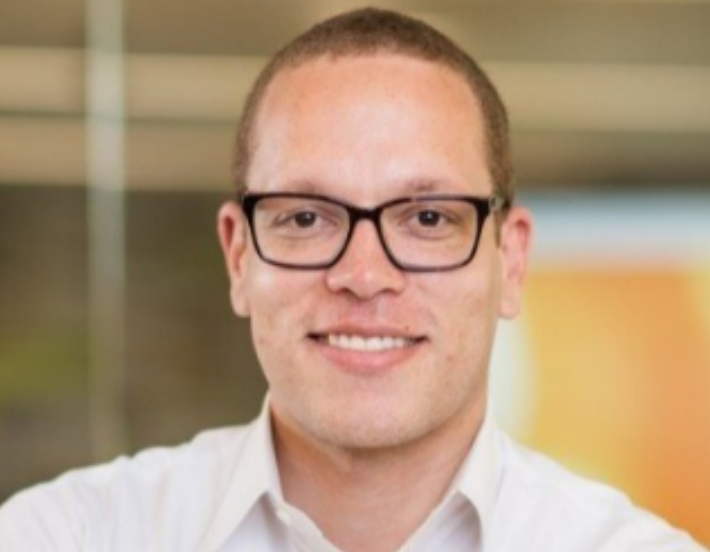

Born in Cali, Colombia, Daniel Bilbao is the CEO of Truora, a fraud prevention platform that performs background validation and identity verification in seconds. Thanks to his work, well-known companies are now more secure.
Bilbao, a true example of tenacity and entrepreneurial drive, is one of the star guests of Gofest, Bogota's Entrepreneurship Festival, organized by the Bogota Chamber of Commerce (CCB).
How did your story as an entrepreneur begin?
I started my studies here in Colombia. When I finished my undergraduate degree at the Universidad de los Andes, I went to the United States to do an MBA. For a while I worked in investment banking in New York, then I went to Silicon Valley to work in a startup, where I got to know the world of technology. From there I started my first company called Paladin Cyber and later on I started Truora. My family is not an entrepreneurial family, but as a curious fact, my brother, Andrés Bilbao, is one of the co-founders of Rappi. My entrepreneurial career started when I was 33 or 34 years old. It's never too late to be an entrepreneur and get into this world.
How can we make Colombia, and specifically Bogota, attractive investment destinations?
We need several things to happen. The first one has already happened and that is that we have successful companies within the region. For example, in sports, look at the effect created many years ago by 'Lucho' Herrera, Nairo Quintana, and more recently James Rodriguez; when you have a stronghold, the rest of society feels that something is possible. The second is that we have to strengthen the ecosystem. This is a phrase that sounds a bit pretentious, but if we narrow it down to its meaning, it means that many companies, like mine, do a good job and grow permanently. So it is no longer one big company, there are 15 big companies: we have Habi, which is very big; we have Truora, la House, Trii, Domo, Morado, among others. All these startups begin to grow and generate employment, solutions to problems and generate optimism. That is when an investor sees business opportunities in Colombia. That is why we must follow this path of having more and more companies that are successful, and having great champions, such as Rappi, who are the ones that make this ecosystem grow.
What do you think are the conditions that should be in place for local investors to believe more in entrepreneurship?
That is something we need to improve.There are many successful families in Colombia that are not involved in the world of startups, of high-growth ventures.It is something that needs a lot of education. My brother is doing this with the Chamber, they are doing courses and teaching high-income families how to start investing in tech.If you're a young guy in your early twenties from a very successful family, there are two paths: one is to work in the family business and the other is to go overboard.Many of the most successful entrepreneurs I know did that.The more high-net-worth people are entrepreneurs, the better.And, on the other hand, the better ecosystem we have, the more people join.High-impact ventures have two objectives: one is to improve a problem in society, the other is the possibility they have of providing good returns. We have to do good work that generates returns and thus maintain this cycle.
How can these projects and initiatives contribute to solve the problems of the popular economy and society?
What is a particular problem we have in Colombia? The answer is that we do not have financial inclusion. There are initiatives such as Nequi, which have made great progress in providing access to financial products, but we are still a long way away. So, what needs to be achieved?
First there must be more competitiveness, there must be more players. What Banco de la República is doing with the Colombian GDP helps from the regulatory point of view. The second thing starts when we are in that field, like what Truora is doing. We help facilitate the onboarding of a user. If you want to take out a loan, you are a lady who has a family and wants to set up a store to sell things on the corner, to take out a loan you have to do something called onboarding, that is, you have to send your papers, put in your data, etc.
What my company does is that it makes sure that she is who she says she is, without her having to leave her house. Before, you had to spend two days in a bank doing paperwork.
Now, by doing the validation, not only do we reduce fraud, but it is less expensive for the banks to attract this lady, so they give her cheaper loans. In short, we reduce the acquisition costs for the banks and we provide a better service to the lady.
There is also something else that happens in Colombia: fraud is common here, which is one of the reasons why rates are so high.
If my company develops tools, such as what we do with artificial intelligence to verify that the ID card is not going to be forged, there is less fraud; and if there is less fraud, the bank can give better rates to people, so the person has a better chance of success and there is greater financial inclusion.
Another example is Platzi, which generates education. What do Freddy (Vega) and his team do?They help people to become entrepreneurs. So if I don't have access to a university, I can get into a Platzi course and become a code developer.This literally lifts me out of poverty, because I become a more productive person.
Why is Gofest a must-attend event for the regional innovation and entrepreneurship ecosystem?
Because we all go. All the people who are moving the technology sector will be there. But it is not only that, everything good that is happening in Bogota is being concentrated in Gofest. It is an event that generates a lot of pride for the city and for the country. They are going to see all of us who are trying to do things to improve the city and the country, telling them about our ideas, our work and what we are doing.
The event is now in its seventh edition. How is Gofest contributing to Bogota and Colombia becoming a regional benchmark for entrepreneurship and innovation?
It attracts talent, it is a very good platform where ideas and projects that are working very well are raised. It also inspires people to go out, to work, to execute, to do what we have to do every day to be a better city and a better country. Every year it gets better, this year is much better than last year, so it sets the bar high. Finally, it creates a healthy competition between cities, it is a great reference. I don't think only of Bogota, I think of Colombia: Cali, Barranquilla, Medellin, and I see how they are all doing an exercise to make the region grow. We are all fans of what the chambers of commerce and governments are doing, we are trying to coordinate, grow and cooperate.
What are three pieces of advice for a person who wants to stand out with his project, who wants to take it to a new level?
The first, the most acidic, is to change friends. When you want to be an entrepreneur, the best thing you can do is to surround yourself with entrepreneurs. In order to succeed, the amount of effort, dedication and sacrifices required is so high that being surrounded by people who are involved in the same story as you are is very positive. The second is to look for inspiration. It's hard to get up every day, it gets tough. This is a vocational job, so being able to have opportunities for inspiration, such as attending Gofest, is very nice.
Finally, you have to think as a team. Something we have done very well in Colombia is that we have achieved a group of entrepreneurs who understand, and this is a copy of Silicon Valley, that we are all trying to grow and that there is something for everyone. When you start as an entrepreneur, you are a little bit cowardly and competitive. You look at the startup next to you and you feel bad or envious, that is, you feel uncomfortable with someone else's success. That is a mistake. What you have to do is to be happy for the people who are doing well, because the tide is rising for all of us. We must try to support the ecosystem in the little that we can do. Everything we are doing is to achieve a collaborative mentality that is bearing so much fruit.
What can we expect from your participation in Gofest? I am going to talk to them with a lot of transparency, about where we are as an ecosystem, where we are going and where the great opportunities are.


